
English| EUR
Suggested for you
More currencies
Choose a language
Sardinia's 1,800 kilometres of coastline shelter dozens of shore-accessible snorkeling sites where visibility regularly exceeds 25 metres. This guide maps the most rewarding locations, the species you'll encounter and the conditions that determine water clarity.
Quick answer
Spot snorkeling sardaigne is accessible year-round at public beaches with free entry, though the clearest conditions occur between May and October when water temperatures range from 18°C to 26°C. The Gulf of Orosei, Tavolara Marine Protected Area and the southwest coast near Chia offer the highest biodiversity and visibility. Morning arrivals between 08:00 and 10:30 provide the calmest water before afternoon thermal winds reduce clarity.
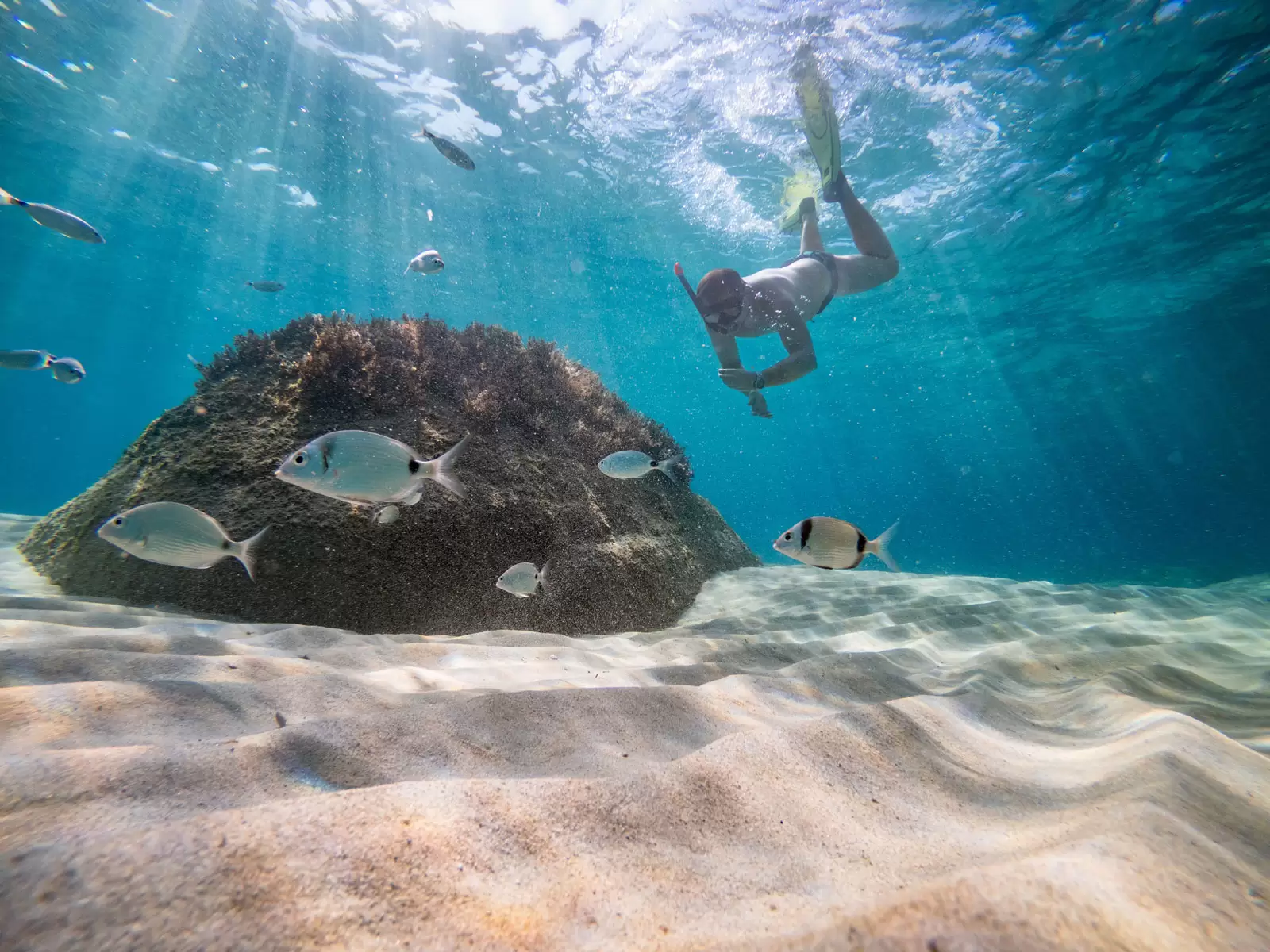
Sardinia's geological isolation created an underwater landscape distinct from the Italian mainland. Granite headlands and limestone cliffs descend into sand channels and Posidonia meadows that host over 400 Mediterranean fish species, including dusky grouper, dentex and schools of salema. The Gulf of Orosei on the island's east coast contains the most dramatic topography for spot snorkeling sardaigne. Cala Mariolu and Cala Goloritze offer vertical rock faces that drop to 15 metres within swimming distance of shore, where damselfish and wrasse inhabit the crevices. The protected waters here maintain exceptional transparency due to limited boat traffic and the absence of river runoff. Further north, the Tavolara-Punta Coda Cavallo Marine Protected Area enforces zoning that has allowed grouper populations to recover visibly since the early 2000s. Snorkelers entering from Cala Brandinchi frequently sight octopus in the shallows and occasionally Mediterranean moray eels in deeper boulder fields. The southern coast presents a different profile. Chia's beaches sit adjacent to submerged Roman anchors and amphorae fragments visible at three to six metres, though these archaeological remnants are protected and must not be touched. The sandy substrate here supports different fauna—razorfish bury vertically in the sand, and cuttlefish patrol the Posidonia edges during spring spawning. Water clarity at southern snorkeling sites in Sardegna fluctuates more than in the east due to the Maestrale wind, which stirs sediment but also flushes nutrients that draw pelagic species closer to shore. Marine Protected Areas around Sardinia restrict certain activities but welcome snorkelers. The Isola dell'Asinara reserve in the northwest and the Capo Carbonara area near Villasimius both offer marked underwater trails with species identification plaques submerged along the route. These sites report the highest concentrations of noble pen shell, the Mediterranean's largest bivalve, now critically endangered elsewhere. Visibility at depth depends on seasonal plankton cycles—spring blooms reduce clarity to 10 metres but attract larger fish, while autumn offers gin-clear water with sparser marine activity.
“Granite headlands and Posidonia meadows host over 400 Mediterranean species within swimming distance of Sardinia's shore.”
The best arrival window is 08:00–10:30 to avoid crowds and enjoy clearer water visibility before afternoon winds pick up. Selecting the right season ensures a balance between water temperature and visitor density.
Warm waters 22°C–26°C; sunny
Water is warm but popular spots become crowded by midday. Arriving early is essential during these months.
Cooler 18°C–21°C; calm seas
Fewer visitors provide a quieter experience. Sea conditions are generally stable for snorkeling activity.
—
Mid-week early arrivals offer the highest visibility. Winds typically remain calmest during the first hours of the day.
Verdict: For optimal snorkeling conditions, plan your visit during weekday mornings in June or September, arriving between 08:00 and 10:30.
Public coastal areas across Sardinia are open for snorkeling daily, providing 24-hour access to marine environments.
Sardinia features numerous snorkeling spots scattered along its extensive coastline, many of which are inaccessible by public transport. Renting a private vehicle is the most practical way to reach secluded coves and hidden rocky inlets.
SS125 Orientale Sarda for eastern coves
SS131 Carlo Felice for western coastal areas
Rental from local ports (e.g., Palau or Santa Maria Navarrese)
Follow marked coastal trailheads from main regional roads
Plan your travel to reach your chosen location within the best arrival window of 08:00–10:30. This ensures easier parking access and allows for clearer water visibility before the onset of afternoon winds.
Sardinia's marine protected areas and beaches enforce strict conservation rules to preserve fragile ecosystems. Respecting local regulations ensures these snorkeling sites remain accessible and thriving.
Gear and documents you'll need for a safe, comfortable snorkeling day along Sardinia's coast.
Everything you need to know about spot snorkeling sardaigne
Public beaches across Sardinia offer free access to water activities, meaning there is no entry fee for a spot snorkeling sardaigne experience. You should focus your budget on equipment rentals or boat excursions if needed. Always check local signs for any specific area restrictions.
The recommended arrival window is 08:00–10:30 to avoid crowds and enjoy clearer water visibility before afternoon winds pick up. Planning your visit during these hours ensures a more peaceful observation of the seabed. This timing is ideal for light-filled aquatic photography.
When visiting a spot snorkeling sardaigne site, it is important to respect the marine ecosystem by not touching coral or feeding fish. Always dispose of your trash properly and avoid using sunscreens that contain harmful chemicals. Preserving the underwater environment ensures these habitats remain healthy for future visitors.
You can access public beaches at any time, as they are open daily from 00:00–23:59. This flexible schedule allows you to plan your visit around weather conditions or personal preference. Remember that while the beaches are always open, the best water conditions occur in the morning.
Joining a boat trip to reach a secluded snorkeling spot in Sardinia can provide access to hidden coves that are not reachable by foot. These excursions often provide professional guidance and high-quality gear for your convenience. Check our booking widget to see available marine tours in your area.
Snorkeling is a family-friendly activity that children can enjoy in calm, shallow waters. Parents should always ensure children wear appropriate flotation devices and are supervised at all times. Calm mornings are generally safer and more enjoyable for younger participants.
Snorkeling en Sardaigne Nord
Read more GuideQue voir en snorkeling en Sardaigne
Read more GuideSnorkeling en Sardaigne Sud
Read more GuideCarte des Spots de Snorkeling en Sardaigne
Read more GuideConseils Snorkeling Sardaigne : Forum
Read more Tickets & toursSnorkeling Pula Sardinia
Read more Tickets & toursSnorkeling Baja Sardinia
Read more Tickets & toursSnorkeling in Palau Sardinia
Read more